

Color is usually the first thing people notice in my work, but it’s rarely the first thing I decide.
Most paintings begin without a plan. I work flat, standing over the paper, letting the first wash arrive before I know where it’s going. Sometimes it’s quiet, a thin layer that barely announces itself. Other times it’s bold and immediate, a field of color that demands attention. I trust both.
I work primarily in watercolor, acrylic, and mixed media, often moving between them depending on the scale and energy of the piece. Watercolor, especially, keeps me honest. It doesn’t allow much control once it’s moving, and that’s part of the conversation. I tilt the paper, let washes run, pool, and collide. I introduce inks, pre‑mixed colors, and sometimes unexpected materials, coffee grounds, salt, rice, even household cleaners, anything that helps the surface respond.
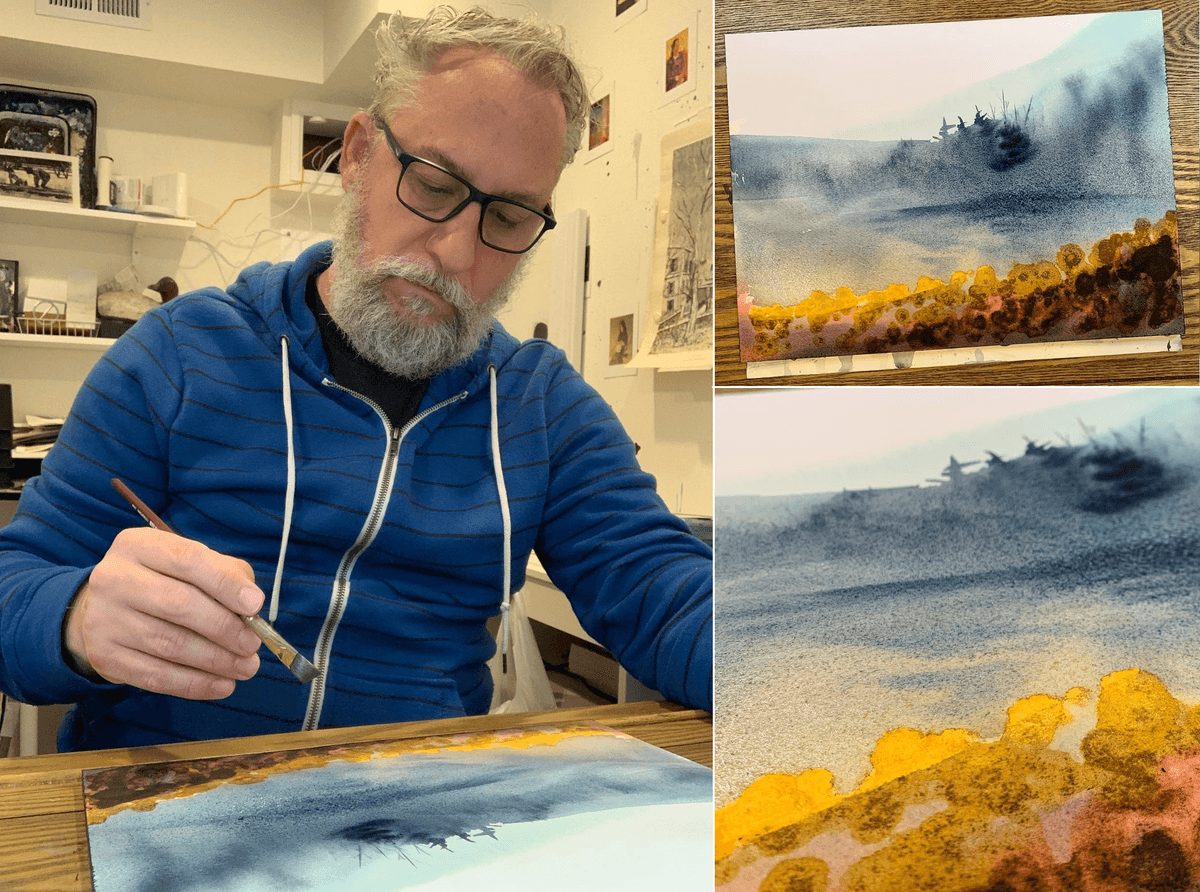
My palette rarely changes. I’ve been using variations of the same setup since my university days, and lately I’ve returned to the John Pike palette. It gives me room to experiment, to let colors mix in ways I didn’t fully anticipate. I plan color mostly by memory, trusting what I’ve learned through repetition rather than overthinking each choice.
Most of my paintings are unplanned. If there’s a sketch, it’s light, just enough to suggest direction. From there, the work becomes responsive. I test, adjust, rework, and sometimes erase entire passages until the composition answers back. I tend to work on several pieces at once, moving between them as each one asks for something different.

I’m interested in paintings that feel like conversations rather than conclusions. I don’t want to explain everything. I want the work to invite a pause, a second look, maybe even a question. Influences like Degas, Kandinsky, Duchamp, and Rockwell remind me that risk and generosity can coexist, that provocation works best when it feels like an invitation.
Whether a piece ends up as an original or a print, my hope is the same: that it translates something emotional into form and color, and that it gives the viewer space to bring their own story into the exchange.
That’s where the work really begins. Book a session and let's paint something on paper.