

I learned to paint in a classroom in upstate New York, under teachers who took art seriously enough to be hard on you about it. Murray Tinkleman, Bob Dacey, John Thompson, Roger DeMuth, Jerome Witkin, Syracuse University's illustration program didn't hand out encouragement lightly. You earned it, brushstroke by brushstroke. I graduated with a BFA and a head full of "art gods" Degas, Klimt, Homer, Chagall, and a real belief that this was going to be my life.
Then life did what it does, and took a longer route to get there. Syracuse to Washington D.C. to Santiago de Compostela
Twenty-Five Years of Getting Good at Something Else
For more than two decades, I worked as a creative professional in the U.S., art directing, building brand strategies, managing communications for large, complex organizations. It was real work, and I was good at it. I led teams, ran multimillion-dollar projects, and spent years thinking in terms of stakeholders, deadlines, and getting a hundred moving pieces to line up correctly. I'm proud of that career. It taught me discipline I still use today.
But somewhere in there, the painting stopped being a daily practice and started being a thing I used to do. A folder of student work. A hobby with a rotating deadline of "someday."
The Decision
Eventually, someday stopped feeling like enough of a plan.
I made the choice to leave a stable, full-time career in the U.S., not because it wasn't good work, but because I wanted to find out what I actually made when nobody was assigning it to me. I wanted more art-making, and I wanted it somewhere that would change how I saw things, not just where I lived. That's how I ended up in Galicia, near Santiago de Compostela, about as far from a government office as you can get, in every sense that matters.
Starting Over, On Purpose
Rebuilding a creative life in a new country, in a new language, at nearly fifty, is humbling in ways a design brief never was. Galicia runs on its own rhythm, more relational, more patient, more community-based than the structured environments I'd spent my career inside. Clients and connections here are built on trust and conversation as much as on a portfolio. I had to relearn how to introduce myself, professionally and otherwise, in Spanish and in Galician, and get comfortable being a beginner again.
That discomfort turned out to be useful. When you can't lean on fluency, you pay closer attention, to light, to gesture, to the parts of a place that don't need translating. Galicia gave me that in abundance: the particular grey-gold quality of light here, the Atlantic weather rolling in off the coast, a slower pace that leaves room to actually look at something before you paint it.
Where Color & Conversations Comes From
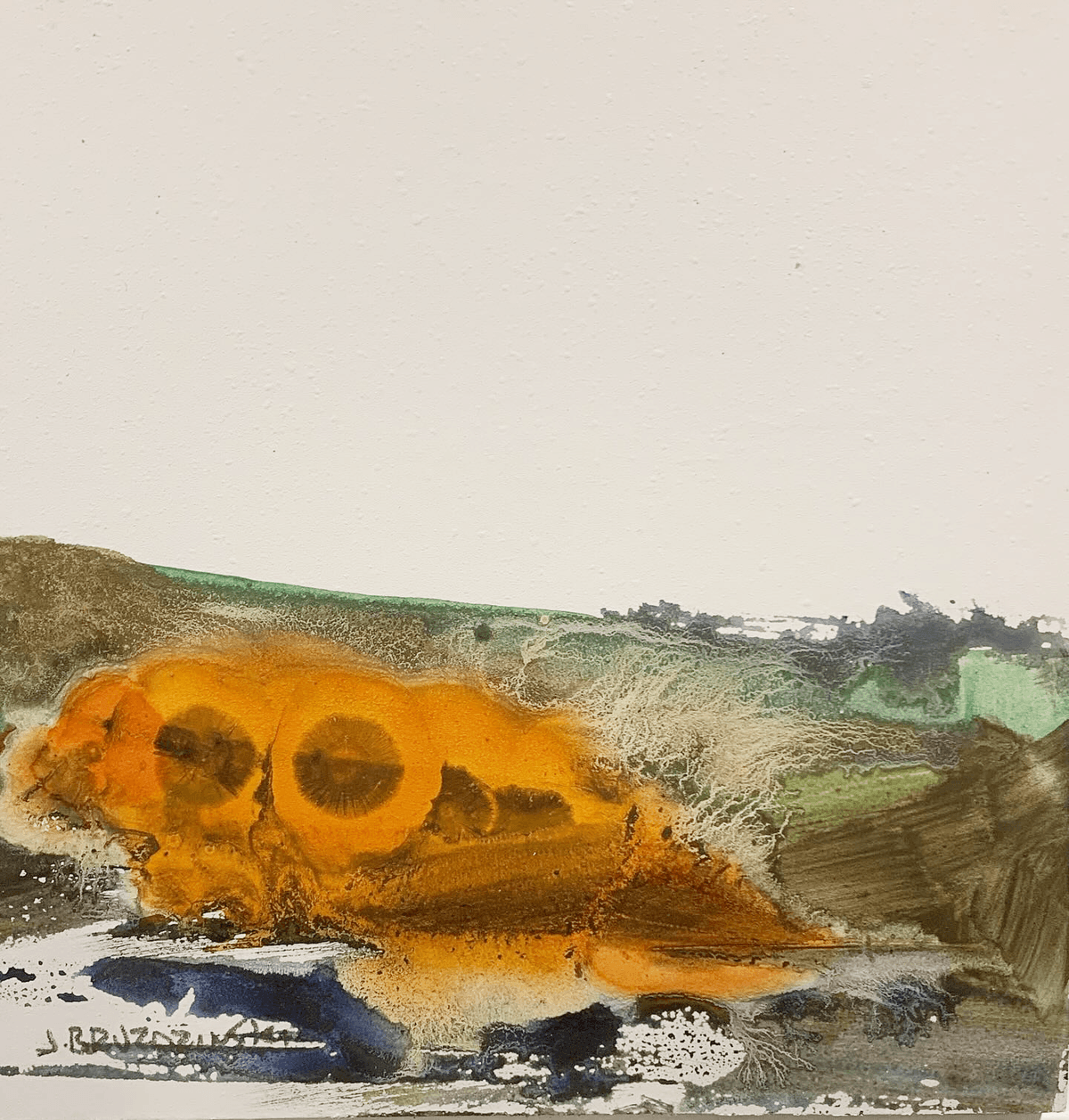
Color & Conversations grew directly out of that experience, the idea that painting and conversation are both things that go better when you slow down and pay attention to the people and place around you. I lead sessions in watercolor and mixed media now, the same materials I trained in at Syracuse, but shaped by a place I had to earn my way into understanding.
It's not really a reinvention. It's more like a translation, taking twenty-five years of creative discipline and pointing it, finally, back at the thing I set out to do in that classroom in New York. Art is risky, generous, and provocative. Leaving a career to go find out what I could still make was the first real test of whether I believed that.
I'm based in Santiago now. I still think in Syracuse.
If you'd like to see what that combination looks like on paper, book a session, I'd love to show you.