

For years, my job was to get things right.
Before I picked up a brush professionally, I was a student and more recently, I spent a career as an art director, building brand identities, managing campaigns, making sure a hundred small visual decisions lined up into something clear and accurate. That work mattered, and I'm proud of it. But it trained me to think in terms of precision. Match the reference. Stay on brand. Get it exactly right.
Watercolor asked me to unlearn that.
The Photo Is a Trap
When I first started painting landscapes, I did what most people do, I took a photo of somewhere beautiful and tried to reproduce it. And every time, something was missing. The painting was accurate, but it wasn't true. It looked like the place. It didn't feel like being there.
A photo flattens a moment. It captures light at one exact second, from one exact angle, and asks you to copy it faithfully. But that's not how we actually remember a place. We remember the wind, not the wind's shadow on the water. We remember standing somewhere between two conversations, half paying attention, more struck by a feeling than a detail. None of that shows up in a photograph. All of it shows up in memory.
So years ago, I stopped using photos as reference altogether. Now, if I want to paint a place, I go stand in it, or I sit with the memory of having stood in it, and I try to paint that instead. Do not get me wrong, reference photos are important. They can give you reality, but also keep you static. I do you use my own photos for more detailed painting, but by-in-large feelings first!
What Changes When You Paint From Feeling
It's harder, honestly. There's no reference to fall back on when you're not sure what color the sky was. You have to trust something less precise, an impression, a mood, a handful of details that stuck for a reason.
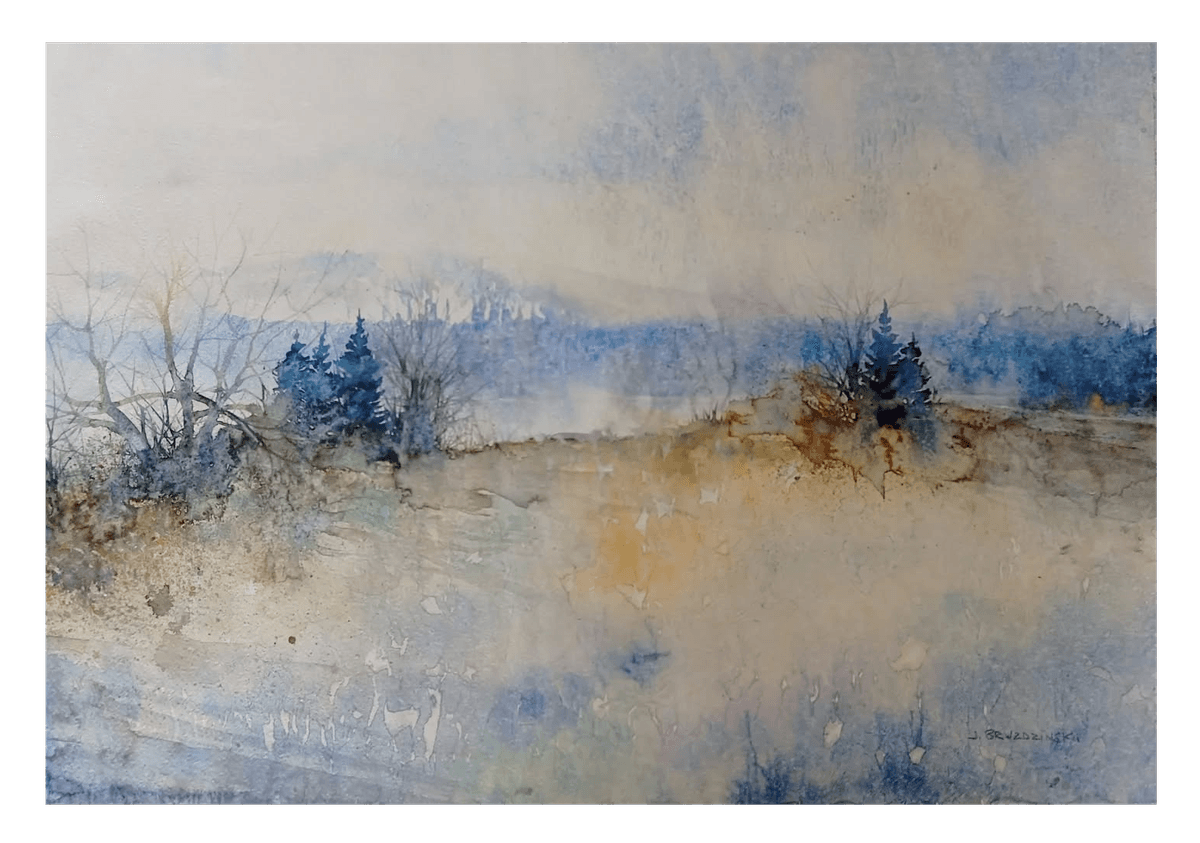
But something else happens too: the accidents start to matter. A bloom of color spreading further than planned starts to look like weather. A wash that dries unevenly starts to look like memory itself, vivid in some places, faded at the edges, exactly like real recollection. When you're not chasing photographic accuracy, those "mistakes" stop being mistakes. They become the most honest part of the painting.
This is the whole idea behind "Memory Landscapes", one of the sessions I lead through Color & Conversations. I ask people to think of a place that mattered to them, not to look it up, not to find a photo, and paint from what's left after the details fade. What stays behind is usually the part worth painting.
Art Is Risky. Generous. Provocative.
That's a phrase I've used to describe my own work for a long time, and it applies here more than anywhere. Painting from a photo is safe. You know what you're aiming for. Painting from feeling is a risk, you might miss, you might end up somewhere you didn't expect, and you have to be generous enough with yourself to let that happen anyway.
I studied under teachers who pushed hard against playing it safe, Murray Tinkleman, Bob Dacey, John Thompson, Roger DeMuth, Jerome Witkin, and the lesson that stuck with me most wasn't a technique. It was permission. Permission to trust your hand over your reference photo. Permission to let a painting be a little wrong if it's more honest that way.
Try It Yourself
You don't need formal training to paint from memory instead of reference, you just need to be willing to let go of getting it "right." That's exactly what a Memory Landscapes session is built for: no photos, no pressure to be accurate, just guided practice translating a place you remember into color and gesture.
If that sounds like your kind of afternoon, book a session and let's see what your memory of somewhere looks like on paper.